Research Area
Marine Robots
Robots that operate autonomously under water for extended periods of time for undersea sensing and data collection.
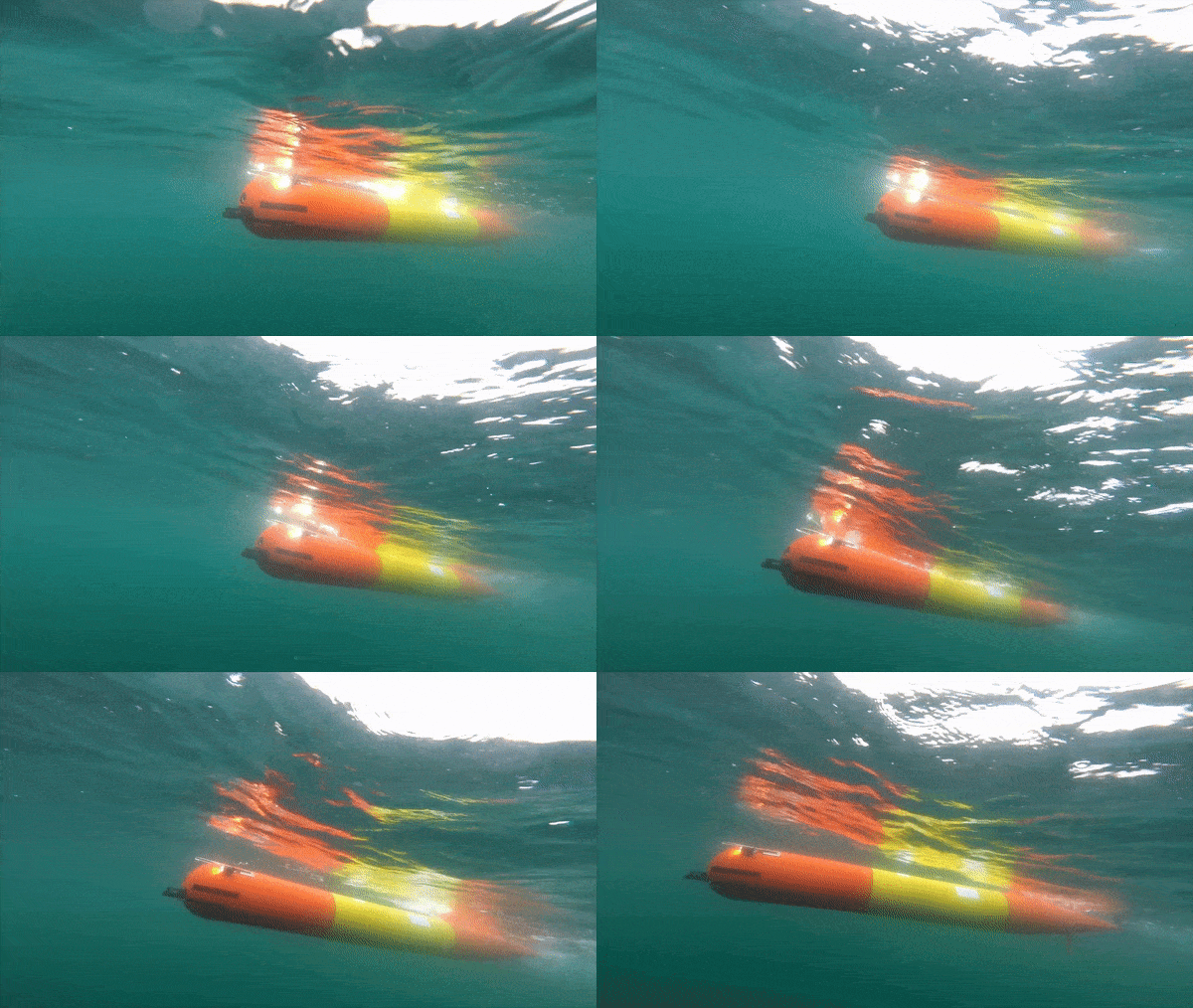
I have not done any research in this area…
…but I did spend a year working at the Woods Hole Oceanographic Institution (WHOI) on autonomous underwater vehicles, and the experience shaped so much of my developmental work after that I had to include it.
Operating under water poses unique challenges. Saltwater is extremely corrosive and finds a way of getting everywhere. Operating at depth needs careful pressurized sealing of all electronics, and the deeper the robot goes, the heftier the hull and the seal. Maintenance during a deployment is a luxury. Robots are operating kilometers away, where, if something goes wrong, the likely outcome is a lost million dollar robot. Even if recovery is possible, the process of depressurizing, opening the hull, performing maintenance, re-pressurizing and re-deploying can easily take a full very expensive day.
Communication is also a challenge. Electromagnetic modes of communication such as radio and Wi-Fi that most terrestrial and aerial robots rely on fail as their range in water is in the order of meters. Instead, marine robots turn to acoustic communication, which has a very long range at the cost of bandwidth, and is suitable for little more than a heartbeat and localization ping. It is often said that deep sea exploration is not unlike space exploration for these exact reasons, and the vast majority of the oceans remains largely unexplored.
Marine roboticists however have learned to work within these constraints, and this is what I spent my year at WHOI learning about.
Related papers
No papers listed yet
Papers for this area will appear here as they are added.